advocacy

Commemorating Native culture through medical school- My journey as an Indigenous medical student
By Olivia Spaulding What is Native American Heritage Month? Every year the month of November is dedicated to celebrating Indigenous Peoples across the United States. It is a celebration of heritage, culture, and resilience amongst the first people of this nation. Dr. Arthur C. Parker, a Seneca Indian and co-founder of the Society of American Indians in 1911, organized American Indian Day beginning in 1915. In 1976, it expanded to a week-long celebration. It was declared a national month-long celebration in November of 1990 under the George H.W. Bush administration. More recently, Columbus Day, which is recognized on the second Monday of October, has been reclaimed in cities across the United States as Indigenous People's Day. You can find more information on the National Native American Heritage Month website. My Journey My name is Olivia Spaulding, and I am a second year medical student at Howard University College of Medicine....

AWS Highschool Outreach Event: Becoming An Advocate For Women In Surgery
Earlier this year, I saw an opportunity to volunteer at the Association of Women Surgeons Highschool Outreach Event. I have never before come across a formal mentorship program for women high school students during my medical schooling in my home country, India. This made me curious, and I was very enthusiastic to get involved and contribute. The day consisted of impactful events, including guidance on crafting stories, speed mentoring, a suture workshop, and exposure for the high school students to some of the conference events, such as the Keynote Address and the Starr Medical Student and Resident Research Forum. The crafting stories session was highly informative and offered one on one guidance to the students. Dr. T. Salewa Oseni, a prominent breast surgical oncologist at Massachusetts General Hospital, led the students through an engaging story about her path to medicine. She spoke of how she was sure about wanting to...

An Interplay Between Invisibility and Hypervisibility while Pursuing a Surgical Subspecialty
By Natalia G. Penaloza My latinidad in the context of pursuing a surgical subspecialty has made me both invisible and hyper-visible. As a Latina in an operating room with a thousand moving pieces, from ancillary staff turning-over a room in under 30 minutes, scrub technicians meticulously following the surgery anticipating the next instrument, to nurses ensuring the patients are safe and comfortable, I was often identified as one of these healthcare workers. I take pride in knowing that I share some of the same qualities as them; efficiency, attention to detail, and empathy. Still, it is often a surprise to many when I introduce myself as the medical student on the team. The hyper-visibility is accompanied by my continuous effort to ensure I know all the equipment, anatomy, steps, complications, follow-up treatments, to know it all. If I don’t, I will not have represented Latinas and women in medicine well....
The Same but Different
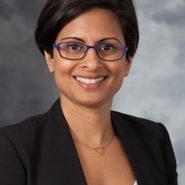
By Priya Dedhia, MD, PhD Emily was one of my first friends when I started as an attending surgeon. It was like we were destined to be friends—during the shutdown in March 2020, Emily texted me when she saw someone who looked like me walking near her house. We found out that I lived 1 block – a 4-minute walk – away, so we started going on pandemic walks together regularly. We commiserated about being junior attendings and not being able to operate… but also secretly enjoyed being able to finish overdue manuscripts and sneak in workouts in the middle of the day. We learned that we both had “tiger parents” that led to deep-seated feelings of always needing to do more. We talked about our moms, who both thought we were about as far from the ideal Asian daughter as was possible. We confessed that, sometimes, we were hesitant...

All the Unsaid things: Perspectives from Asian American Women in Surgery
By Annabelle Fonseca I was invited to write a perspective piece on being an Asian woman in surgery in honor of Asian American/Pacific Islander Heritage month. Given the diversity of the Asian American and Pacific Islander community, I couldn’t think of a better approach than to reach out to multiple people and include a breadth of perspectives and lived experiences. I reached out to friends and colleagues from my surgical journey thus far and asked if they would be willing to speak with me or provide me with some insight on their journey, as an Asian American woman in academic surgery. People were generous to a fault with their time and thoughts. I received emails and calls, and sometimes both, from residents, early- and mid-career faculty in academic surgery, as well as from people who were in academic surgery and have since left. Below is my attempt at summarizing what...

Asian Americans in Medicine: Bridge-Tenders for Diversity
By Lily Cheng Last March, eight people – including six Asian women – were killed in a targeted hate crime in Atlanta, Georgia. In the year since, NBC News reports that 74% of Asian American Pacific Islander (AAPI) women have experienced racism or discrimination. Since the beginning of the pandemic, there has been a rise in hate crimes against Asian Americans and Pacific Islanders, mostly against Chinese-American women. What these last few years of the pandemic have highlighted for me is how lucky I have been in my life so far to be relatively removed from discrimination and hate. I was born in China, but my parents immigrated to the U.S. when I was five years old so that my dad could get his Ph.D. at Purdue University. Even in the middle of Indiana in the early 90’s, I remember only one incident when I experienced obvious racism first hand...

The Balance Beam
By Sara Ashai There are days where everything goes wrong, but there are also days where everything goes right. Most days, we sit somewhere in the middle. Our voice stays quiet some days, some days it wants to yell, and some days our voice yells at ourselves. When I was a first year medical student, I was quiet. I came straight through undergrad and was one of the youngest in the class. I felt scared to speak up. I came into medical school wanting to do psychiatry. Interpersonal skills with patients are one of my strengths and I was passionate about mental health, so I thought psychiatry fit that scheme. As the first year continued, I spoke to residents who told me that there was a need for more Pakistani women to go into OB/GYN or any surgical field. Thus, I considered it quietly. Never did I consider myself to...

Cirujana – Thoughts of a Latina Surgery Resident
I’m standing in the Trauma Bay with my heart racing, anticipating the arrival of a gunshot wound victim. Although I’m in my fourth year of residency, an incoming trauma activation still feels as thrilling as it did intern year. Before the arrival of our patient, one of the ER nurses performs a timeout and identifies the members of the treatment teams. She looks at my male attending and calls his name, after which her eyes move right past me as she mentions the other members of the trauma team by name, including the physician assistant and the intern. The patient rolls in shortly after, and my name has not made it to the activation record, even though I am the senior resident. I know it’s a bold assumption to make that I am often overlooked based on my ethnicity and gender, but it’s hard to not make this conclusion. Time...

You can’t be what you can’t see.
By Sheina Theodore, MD I was born and raised in NYC. The product of two Haitian immigrant parents. I saw my parents sacrifice everything for me, just so that the playing field would be leveled. I was fortunate to have them pushing me and making it possible for me to seize many opportunities. One of which was my acceptance into The Sophie Davis School of Biomedical Education, a B.S./M.D. program whose mission was to increase the number of minority physicians in order to care for underserved communities. Through this program, I participated in many community outreach efforts. These efforts were centered around understanding the barriers to health care, treating the patient as a whole (understanding different cultures, beliefs, socioeconomic situations, and how all this can deeply affect the overall wellbeing of our patients), and recruitment of future leaders who will aid in carrying out the mission of the school. I...

Mentorship in Neurosurgery from the Lens of a Black Muslim Medical Student
By Habiba Abdullahi Neurosurgery was something I chose quite early on in life. For many people, something or someone was the reason they chose neurosurgery. For me, it was after reading ‘Gifted Hands’ by Dr. Ben Carson. I was barely 12 then but I decided within me that I would pursue neurosurgery. I was in awe throughout reading the book. 12-year-old me had no idea how the journey would be and all the steps I would need to take to eventually reach my goal. All I knew was I had a dream and I was going to protect and achieve that dream, no matter how long it takes. I kept this dream to myself and never publicly expressed my plan to pursue Neurosurgery till my late teens. It was in grade 11 of high school that I began to publicly express my wish to pursue neurosurgery. I remember a friend,...
